


After a good dinner, one can forgive anybody—even one’s own relations.
Give yourself a treat!
– Oscar Wilde –
When is a meal simply a meal – and when is it a real pleasure? Everyone will answer that a little differently. One thing is certain, however: it has to taste good.
Here you will find everything that contributes to great pasta, along with inspiration for particularly delicious pasta dishes. Take a look, get inspired – and above all: enjoy it.
Culinary Secrets
That is how one manages the perfect pasta
As specialists for good pasta, we can obviously tell you something about the preparation.
One thing is certain: The right cooking time is not the only thing that you should pay attention to, while making pasta. We will disclose some of the important tips that matter. These are the little secrets, which make cooking easier and make all the difference to the enjoyment.
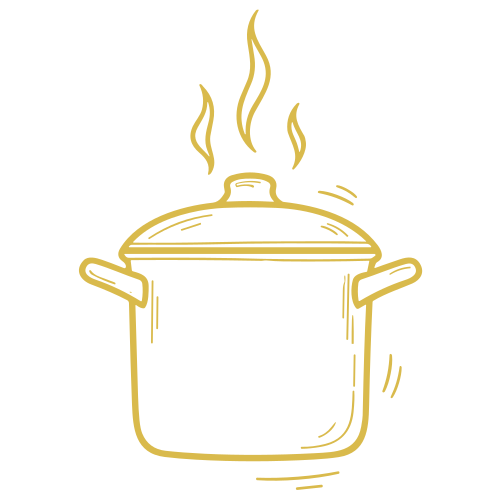
Pasta does not like to be too tightly packed or to economise on water. Therefore treat it to a large pot and use at least 1 litre of water for every 100 g of pasta. This way the pasta has enough space and water to cook evenly, without the pot getting too crowded.

Unsalted water comes to a boil faster, as it has a lower boiling point. Once the water boils rapidly, rule of the thumb is 10 g salt per litre of water. Important: The pasta can go into the water only when it is properly salted.
Occasional stirring prevents the pasta from sticking together. Nudelnester should be given enough time to separate or to split up, right from the first time they are stirred. If there is enough extra space in the pot, the boiling water ensures movement, so that the pasta does not cling to each other.
Oil should not be used either during or after cooking. During cooking it cannot prevent sticking, because it does not mix at all with the cooking water or reach the pasta. After draining, it creates an oil film on the pasta, which causes the sauce to simply roll off.

Never refresh the pasta with cold water after cooking. That way you avoid flushing out the warmth and the pasta will not land cold on the plate. Even worse: Starch on the pasta makes the sauce stick to it, washing removes the starch. So you ruin the taste twice.
During the cooking time you can be guided by the instructions on the package. However, do not just go by the clock, follow your instinct: A small bite helps you to determine the perfect degree of cooking.

The heat retained in pasta straight from the cooking water causes it to continue cooking. If the pasta is to be eaten some time after cooking (e.g. in pasta salad), it should therefore not be covered while still piping hot. Instead, toss it with a little butter and allow it to cool uncovered. Allow for this continued cooking by reducing the cooking time in water by about one minute.
Pasta Knowhow
The mini Zabler pasta-encyclopaedia
Pasta comes from Italy
or not?
We will tell you all this and the inside story of pasta.
Behind every pasta, which is eaten in every country in the world, there is always one thing in common: the love for one of the most diverse foodstuffs ever. But there is much more to discover – and we have put together here some of the most interesting and astonishing facts for you.

Many connoisseurs from several countries could answer this question with “here”- and that would not be a lie. The oldest evidence of pasta so far was found in a 4000 year old pot, which was unearthed in China. Today one assumes that pasta in all its varieties came into being at several places in the world, independent of each other. By the way: The practical procedure, to dry fresh pasta, originates in Arabia. It was used there for the first time around the 12th century, so people were able to take along the perishable, fresh commodity as food for the journey.
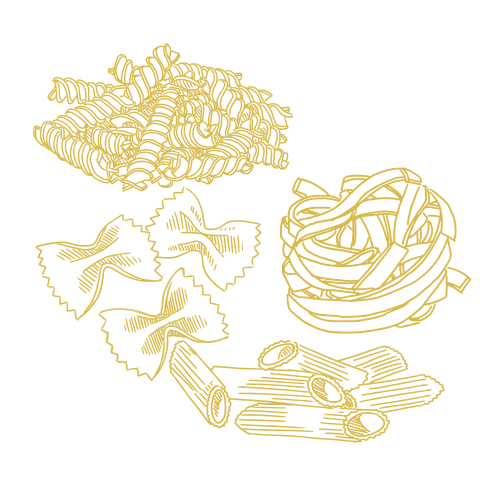
About 600 types of pasta are known around the world. In Italy alone there are about 200 – however, it is not possible to determine an exact figure, as countless varieties are prepared according to undisclosed family recipes. Connoisseurs in Germany can anyway choose from approximately 60 types.

Every German consumes an entire 8 kg of pasta per year. Hence, consumption has steadily increased over the past 20 years. We are still far behind the frontrunner, Italy: there, consumption is 25 kg per year. By the way, a South American country (Venezuela) and an African country (Tunisia) occupy the second and third positions.
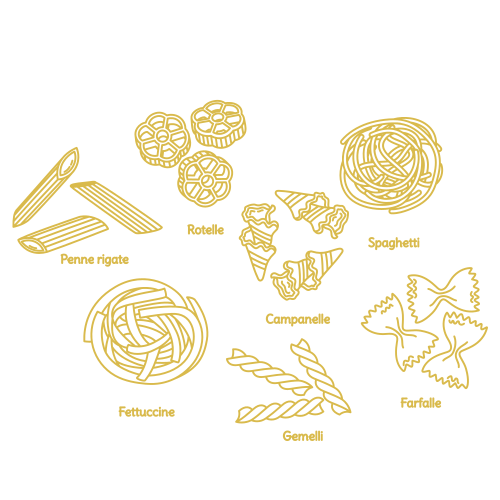
Even though pasta names sound very fancy, they actually provide precise information about the type. Thus pasta which ends in “ette” has a slender shape, whereas “oni” indicates thick, “ini” or “ine” means thin, “elle” is wide and “rigate” means ridged.